For a child, from a very young age, a local neighbourhood can offer up willing playmates and fabulous places to play. But for adults, looking through the lens of safety, those same neighbourhoods also contain speeding cars, hard concrete barriers and scary strangers. The entrenchment of those fears into the unwritten code of norms and responsibilities makes keeping children indoors respectable. We now find evidence of decline in children’s independent mobility and access to outdoor play over a single generation. With curtailment winning out over freedom, the concern is that children are becoming increasingly unhealthy, unhappy and unadventurous.
Ash Sakula believes that, where children are able to play out in the spaces around their homes, the whole community also benefits. Children bring people out of their houses and bring people together. Knowing your neighbours is a simple pleasure and comfort which coheres individual households into communities. But there is more to this than building playgrounds. This is why the Child-Friendly City movement is gaining momentum, arguing for city-wide, policy-level changes that will benefit children and benefit everyone. We love Playing Out, an organisation working on the ground to retro-fit free play into streets and neighbourhoods. And we believe the UN Convention on the Rights of the Child should become respected in planning new neighbourhoods.
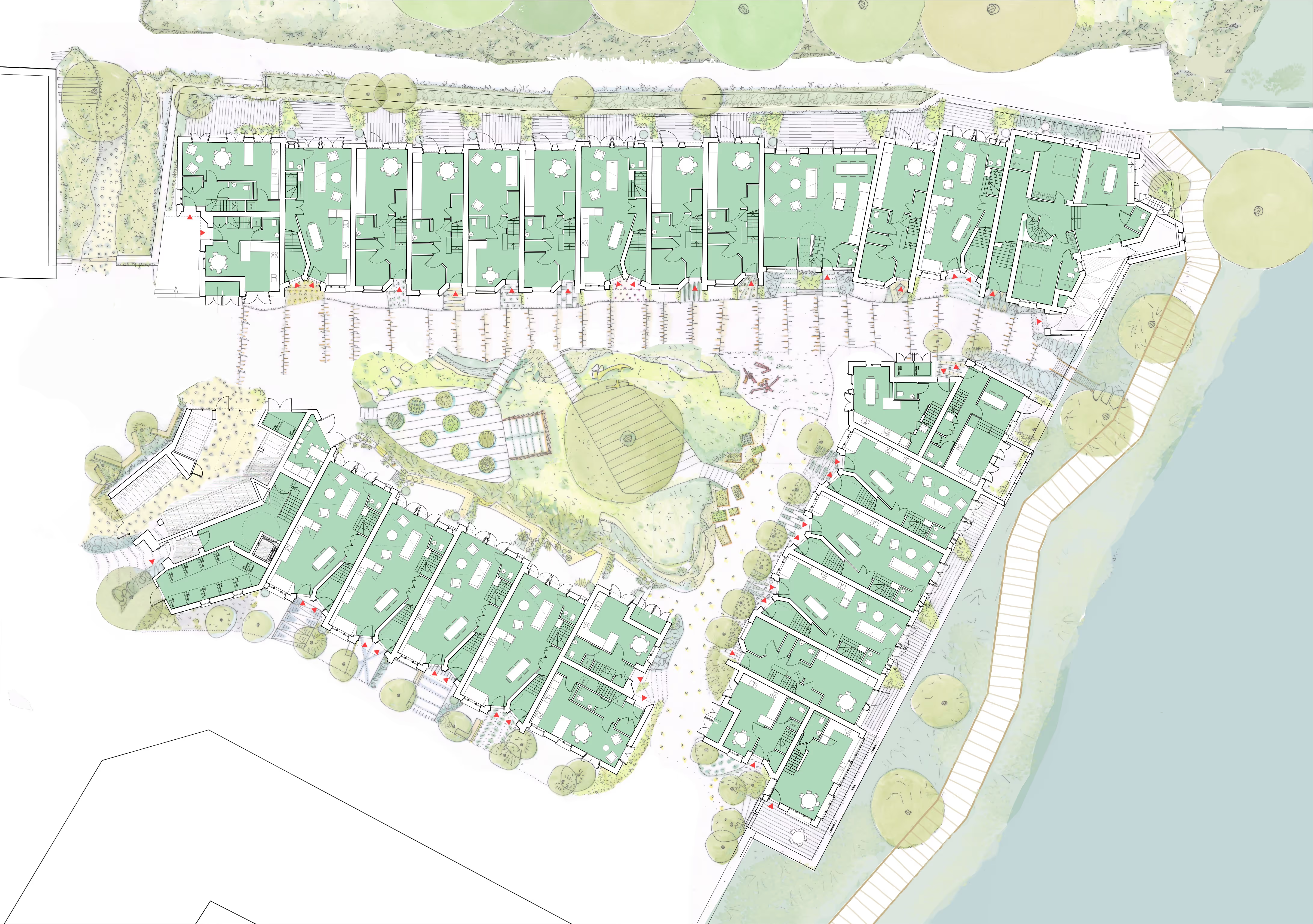
In the design of housing, our goal is to create safe and friendly neighbourhoods where children can play outdoors, both in playgrounds and in spaces outside homes, and neighbours can get together. We give full consideration to children and young people as end-users, involving them as co-designers or ‘experts in their own lives’. We favour urban forms such as courtyards, mews’ and village greens, because of the ways in which such typologies intrinsically lend themselves to path-crossing and communal outdoor activity.
We are sensitive to the manner in which homes connect to outdoor spaces, the point where public realm meets the private domestic sphere, and ensure that shared outdoor space can be safely and directly accessed by children from their homes. We design outdoor space to be overlooked by living-space windows and, within that space, place things like allotments and feasting tables that will draw people from their homes to interact with each other. As much as possible, we aim to make the public realm into a playable landscape for children of all ages.